Understanding the Differences Between In Seat and Hybrid Learning PTA Programs and Their Impact on Our Profession
Physical Therapist Assistant (PTA) education has evolved significantly in recent years. With advances in technology and changing student needs, programs now offer different formats to prepare future PTAs. Two common models are in seat (traditional classroom) learning and hybrid learning, which combines online and face-to-face instruction. Understanding the differences between these approaches, how they foster community, and their regulation by CAPTE (Commission on Accreditation in Physical Therapy Education) is essential for educators, students, and the profession as a whole.
This post explores these key aspects and discusses how these program formats can help move the PTA profession forward.
Differences Between In Seat and Hybrid Learning PTA Programs
In Seat Learning
In seat learning refers to the traditional classroom setting where students and instructors meet physically on campus. This model offers:
Direct interaction with instructors and peers
Immediate feedback during hands-on lab sessions
Structured schedules and routines
Access to campus resources like labs and libraries
This format is often preferred for its immersive environment, especially for clinical skills that require physical practice and supervision.
Hybrid Learning
Hybrid learning blends online coursework with scheduled in-person sessions. Students complete lectures, quizzes, and discussions online, while attending campus for labs, exams, or clinical practice. Key features include:
Flexibility to study from different locations
Self-paced learning for theoretical content
Scheduled hands-on sessions to develop practical skills
Use of digital platforms to access materials and communicate
Hybrid programs aim to balance convenience with the need for direct skill development.
Key Contrasts
| Aspect | In Seat Learning | Hybrid Learning |
|----------------------|-------------------------------------|------------------------------------|
| Location | On campus | Online + on campus |
| Schedule | Fixed class times | Flexible online + fixed labs |
| Interaction | Face-to-face, immediate | Virtual discussions + in-person labs|
| Access to resources | Campus facilities | Digital resources + campus access |
| Learning pace | Instructor-led, uniform | Self-paced online components |
Fostering Online Communities in Hybrid PTA Programs
One challenge of hybrid learning is maintaining a strong sense of community among students. Physical therapy assisting requires teamwork, communication, and peer support. Hybrid programs use several strategies to build online communities:
Discussion boards and forums where students share experiences and ask questions
Virtual study groups using video conferencing tools
Collaborative projects that require teamwork across locations
Regular instructor check-ins to maintain engagement and motivation
Social media groups or messaging apps for informal communication
These tools help students feel connected despite physical distance, which supports learning and professional growth.
CAPTE Regulation and Its Role in PTA Education
The Commission on Accreditation in Physical Therapy Education (CAPTE) sets standards to ensure PTA programs provide quality education that prepares competent professionals. Both in seat and hybrid programs must meet CAPTE requirements, which include:
Curriculum content and clinical experience standards
Faculty qualifications and student support services
Assessment methods and program outcomes
Facilities and resources adequacy
CAPTE accreditation guarantees that graduates are eligible for licensure and meet national competency standards. Hybrid programs must demonstrate that online components do not compromise educational quality or clinical skill development.
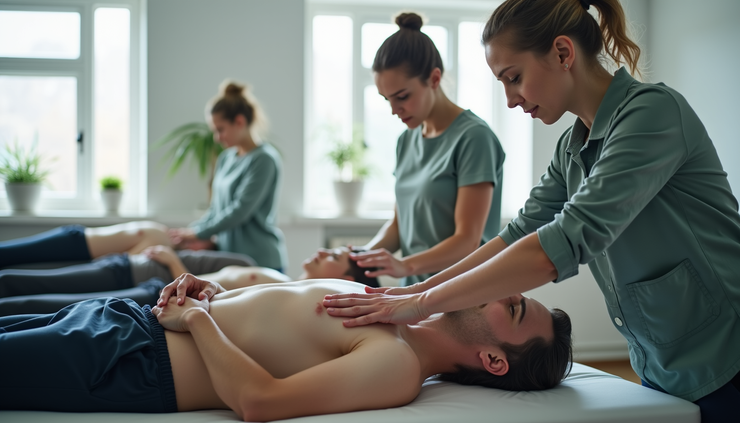
Caption: PTA students practicing manual therapy techniques during an in seat lab session.
How These Program Formats Can Move the Profession Forward
Expanding Access to Education
Hybrid programs make PTA education more accessible to students who cannot relocate or attend full-time on campus. This flexibility can attract a more diverse student population, including working adults and those in rural areas.
Enhancing Learning Through Technology
Online components allow for interactive multimedia, simulations, and self-assessment tools that can reinforce learning. Students can revisit lectures and materials at their own pace, improving retention.
Maintaining High Standards with CAPTE Oversight
CAPTE’s rigorous standards ensure that regardless of format, PTA graduates have the necessary knowledge and skills. This consistency protects patient safety and professional reputation.
Building Stronger Professional Communities
By fostering online communities, hybrid programs prepare students for the increasingly digital healthcare environment. Collaboration skills developed online translate to telehealth and interdisciplinary teamwork.
Preparing for Future Challenges
The COVID-19 pandemic accelerated the adoption of hybrid learning. Programs that adapt to flexible models are better positioned to continue educating PTAs during disruptions, ensuring workforce stability.
Practical Examples of Hybrid PTA Program Success
A hybrid PTA program in the Midwest reported a 95% pass rate on the licensure exam, matching traditional programs.
Students in a hybrid program appreciated the ability to balance family and work commitments while completing clinical hours on campus.
Faculty used virtual reality simulations to teach anatomy and movement, enhancing understanding before hands-on labs.
Summary
In seat and hybrid learning PTA programs each offer unique benefits. In seat learning provides immersive, hands-on experiences, while hybrid programs offer flexibility and innovative use of technology. Both must meet CAPTE standards to ensure quality education and competent graduates.
Hybrid learning fosters online communities that support student engagement and prepare future PTAs for a digital healthcare world. By embracing these models thoughtfully, the PTA profession can expand access, improve education, and adapt to changing healthcare needs.
For students and educators, understanding these differences helps make informed decisions about education paths. For the profession, it means building a stronger, more adaptable workforce ready to meet tomorrow’s challenges.


Comments